
Le minuteur sonne, mais le four continueChez LangGraph, le timeout de l’appelant ne terminait pas le travail descendantThe timer rings while the oven keeps cookingIn LangGraph, the caller’s timeout did not terminate descendant work
Le minuteur sonne au passe et la commande est déclarée perdue. Pourtant, personne n’a coupé le feu au fond. La brigade relance le même plat pendant que le premier continue. Temps, produits et addition comptent alors double.Dans LangGraph, un timeout à la frontière de l’appelant ne terminait pas nécessairement le travail sous-jacent. Une tentative de remplacement pouvait alors recouvrir l’exécution d’origine, avec des effets de bord et un coût dupliqués.The timer rings at the pass and the order is declared lost. Yet nobody turned off the heat in back. The brigade starts the same dish while the first keeps cooking. Time, produce, and the bill now count twice.In LangGraph, a timeout at the caller boundary did not necessarily terminate the underlying work. A replacement attempt could then overlap the original execution, duplicating side effects and cost.
La cuissonExécution et cycle de vieCookingExecution and lifecycle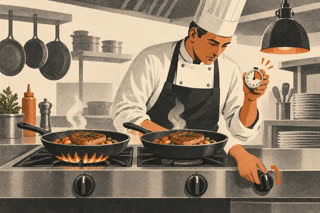
On relance, et deux plats partent — au passeChronologieFired again, and two plates leave — at the passTimeline
Une cuisson longue dépasse le temps qu’on lui avait donné. La scène reste au passe.Une opération longue dépasse son délai imparti.A long cook runs past the time it was given. The scene remains at the pass.A long-running operation exceeded its deadline.
Au passe, le minuteur sonne et la commande est notée perdue. La scène reste au passe.L’appelant reçoit un résultat de timeout.At the pass the timer rings and the order is written off. The scene remains at the pass.The caller received a timeout outcome.
Au fond, rien n’a été coupé : la cuisson continue. La scène reste au passe.Le travail sous-jacent peut rester vivant.In back nothing was switched off: the cooking carries on. The scene remains at the pass.The underlying work could remain alive.
On relance la même commande pour rattraper le retard. La scène reste au passe.Un retry ou un remplacement peut démarrer.The same order is fired again to catch up. The scene remains at the pass.A retry or replacement could start.
Deux plats identiques sortent, et l’addition les compte tous les deux. La scène reste au passe.Des effets de bord et des coûts dupliqués deviennent possibles.Two identical plates leave, and the bill counts both. The scene remains at the pass.Duplicate side effects and cost became possible.
Le minuteur mesurait l'attente, pas la cuisson — au passeMécanismeThe timer measured the wait, nothing else — at the passMechanism
Le minuteur du passe mesure l’attente de celui qui attend. Il ne tient pas la main du cuisinier au fond, ni le four du traiteur d’à côté. Ce sont eux qui font le plat, et rien ne les arrête. La scène reste au passe.Le timeout possédait l’attente de l’appel, pas le processus descendant ni le job distant porteur de l’effet réel. Annuler une attente n’annule que l’attente : la propriété de l’effet n’a jamais été transférée à celui qui pose la deadline.The timer at the pass measures the waiting of whoever waits. It does not hold the hand of the cook in back, nor the oven of the caterer next door. Those two make the dish, and nothing stops them. The scene remains at the pass.The timeout owned the waiting call, not the descendant process or the remote job carrying the real side effect. Cancelling a wait cancels only the wait: ownership of the effect was never transferred to whoever set the deadline.
Couper le feu, puis l'écrire au passe — au passeRéponseKill the heat, then write the order closed — at the passResponse
Avant de relancer, on éteint le feu soi-même, ou on met le plat de côté pour qu’il ne parte jamais en salle. Puis on l’écrit au passe : cette commande est close. Tant que personne ne l’a écrit, on ne relance pas. La scène reste au passe.Une deadline doit terminer ou fencer le travail qu’elle possède, puis exposer un état terminal observable. Un retry ne devrait être autorisé qu’après lecture de cet état, jamais sur la seule expiration de l’attente.Before firing again, turn the heat off yourself, or set the dish aside so it can never reach the room. Then write it at the pass: this order is finished. Until someone writes that down, nothing gets fired again. The scene remains at the pass.A deadline must terminate or fence the work it owns, then expose an observable terminal state. A retry should be gated on reading that state, never on the mere expiry of the wait.
Le silence du fond ne prouve rien — au passeÉtat actuelSilence from the back proves nothing yet — at the passCurrent state
Le piège existe partout où une préparation continue hors de vue. Le silence du fond ne prouve jamais que le feu est éteint.Pattern durable pour l’exécution d’outils et les tâches de fond des agents. Un retour de timeout côté appelant n’y vaut toujours pas état terminal du travail.The trap exists anywhere a preparation continues out of sight. Silence from the back never proves that the heat is off.A durable pattern in agent tool execution and background tasks. A caller-side timeout outcome still does not amount to terminal state for the work.
La sonnerie mesure la patience, rien d'autre — au passeLeçonA timer that stops nothing measures only patience — at the passLesson
Un minuteur qui ne coupe pas le feu mesure une seule chose : la patience de celui qui attend au passe. La scène reste au passe.Un timeout qui n’arrête pas le travail est un timeout de l’observateur, pas du travail.A timer that does not turn off the heat measures one thing only: the patience of whoever waits at the pass. The scene remains at the pass.A timeout that does not stop the work is a timeout of the observer, not of the work.